Who Are You When the Thing You Built Yourself Around Is Gone?
As a child, Maya Shankar’s future seemed clear.
By nine, she was studying violin at Juilliard.
Soon after, she began studying with Itzhak Perlman.
She was soloing with orchestras.
For a young person, that kind of clarity can feel like a gift.
But it can also become an identity.
You are the gifted one.
The serious one.
The one with a future already taking shape.
And when one dream starts defining you, you stop imagining life in many directions.
You start imagining it in one.
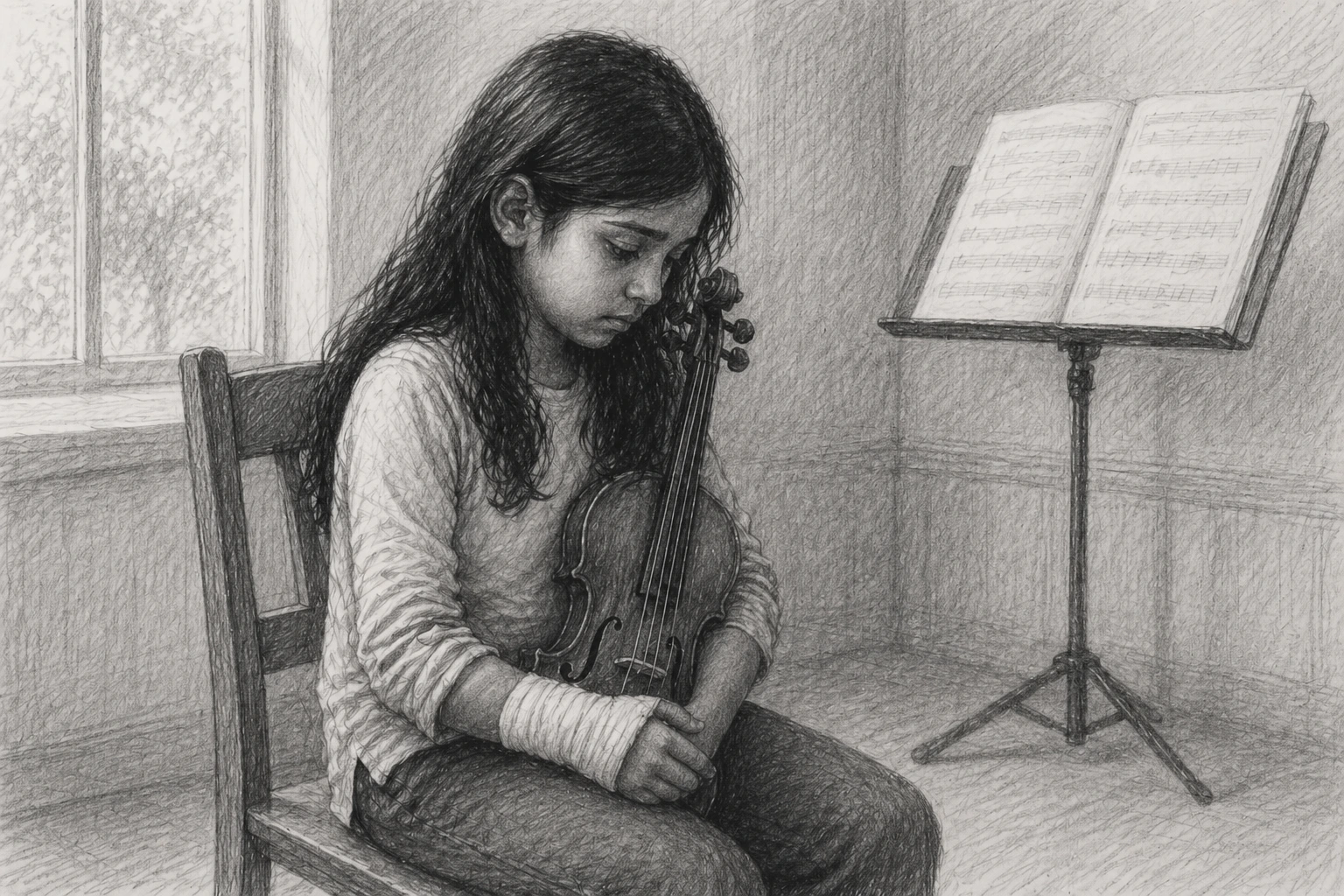
Then Maya injured her hand.
She had overstretched a finger and torn tendons.
Eventually, doctors told her that her dream of becoming a professional violinist was over.
Just like that.
She did not just lose the future she had planned.
She lost the version of herself that had been built around it.
That is why some losses hurt more than they seem to from the outside.
You are not only grieving the thing.
The career.
The relationship.
The role.
The future you were living toward.
You are grieving the identity that came with it.
The quiet question underneath is:
“Who am I now that the thing I built myself around is gone?”
That question cannot be rushed.
But Maya later came to a powerful realization:
Do not define yourself only by what you do.
Define yourself by why you do it.
Because if your identity is built around one version of your life, losing that version can feel like losing yourself.
The title changes.
The career ends.
The relationship shifts.
The dream breaks.
But the deeper why may still remain.
For Maya, the violin was one way of expressing who she was.
But what she loved underneath it — expression, discipline, beauty, devotion, the chance to move people — did not have to disappear.
Those things could take another shape.
That is the hope inside unwanted change.
The dream may end.
But you do not have to end with it.
So when a chapter closes, do not ask only:
“What did I lose?”
Ask:
“What part of me was living through that chapter?”
And then:
“Where else can that part of me go?”
Because you are more than the role, dream, or label that once gave your life shape.
Sometimes change does not erase you.
It asks you to meet the part of yourself that was there before the identity.
This story comes from Maya Shankar’s TED Talk, “Why Change Is So Scary — and How to Unlock Its Potential.”
Maya Shankar is the author of The Other Side of Change.