What a Used Car Lot, a Pawnshop, and a Car Club Taught a Graduating Daughter About Her Own Worth
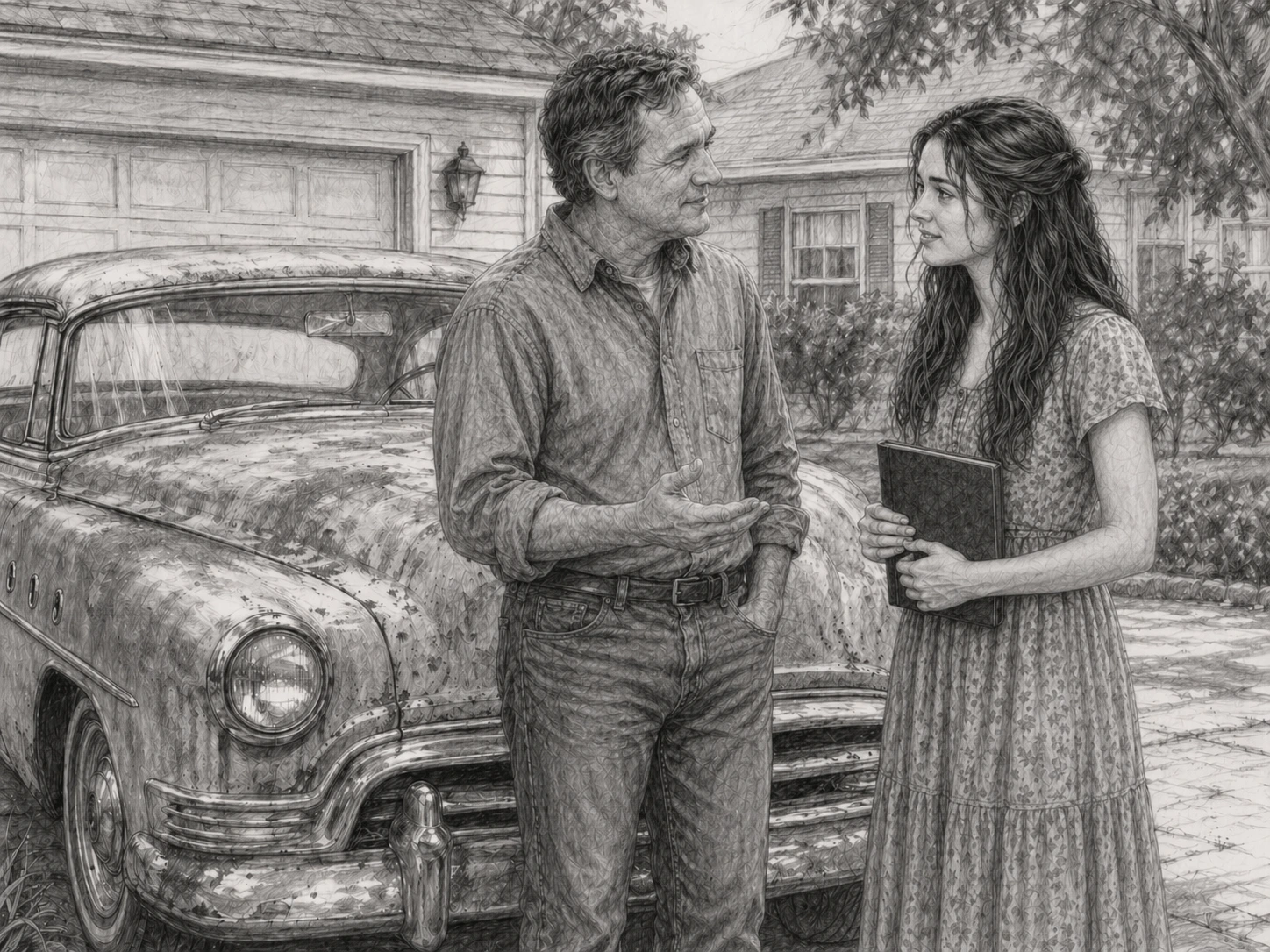
A father called his daughter outside on the day she graduated.
In the driveway sat an old car.
Weathered.
From another era.
“I want to give this to you,” he said. “But first, take it to the used car dealer and ask what they’ll pay.”
She came back later.
“Dad, they offered $1,000. They said it was too old.”
Her father nodded.
“Now take it to the pawnshop.”
She went and came back shaking her head.
“They offered $100. They barely looked at it.”
“One more place,” her father said. “Take it to the classic car club.”
She came back excited.
“They offered $100,000. They said it was a rare classic. Hard to find in this condition.”
Her father looked at her.
“Same car.”
“Three places.”
“Three different prices.”
“The car didn’t change.”
“What changed was who was looking at it.”
The wrong place can make valuable things look ordinary.
Not because they are.
Because it does not know how to recognize them.
Stay there long enough, and you may forget that too.
The job that treats your effort as ordinary.
The room where what you bring keeps going unseen.
The relationship where being fully yourself feels like too much to ask.
The room where you keep making yourself smaller to be accepted.
At first, it feels like mismatch.
Over time, it starts to feel like identity.
You begin to wonder:
Maybe this is all I’m worth.
But the pawnshop was never qualified to price the classic car.
It did not see the rarity.
It did not know the history.
It did not understand the value.
That showed what the pawnshop could not see.
Not what the car was worth.
Before letting someone else’s judgment become your truth, ask:
“Are they able to recognize what I actually bring?”
Because the question is not always:
“Am I valuable enough?”
Sometimes the better question is:
“Am I in the right place to be valued?”
You do not need to prove your worth to every room.
Some rooms were never built to see it.